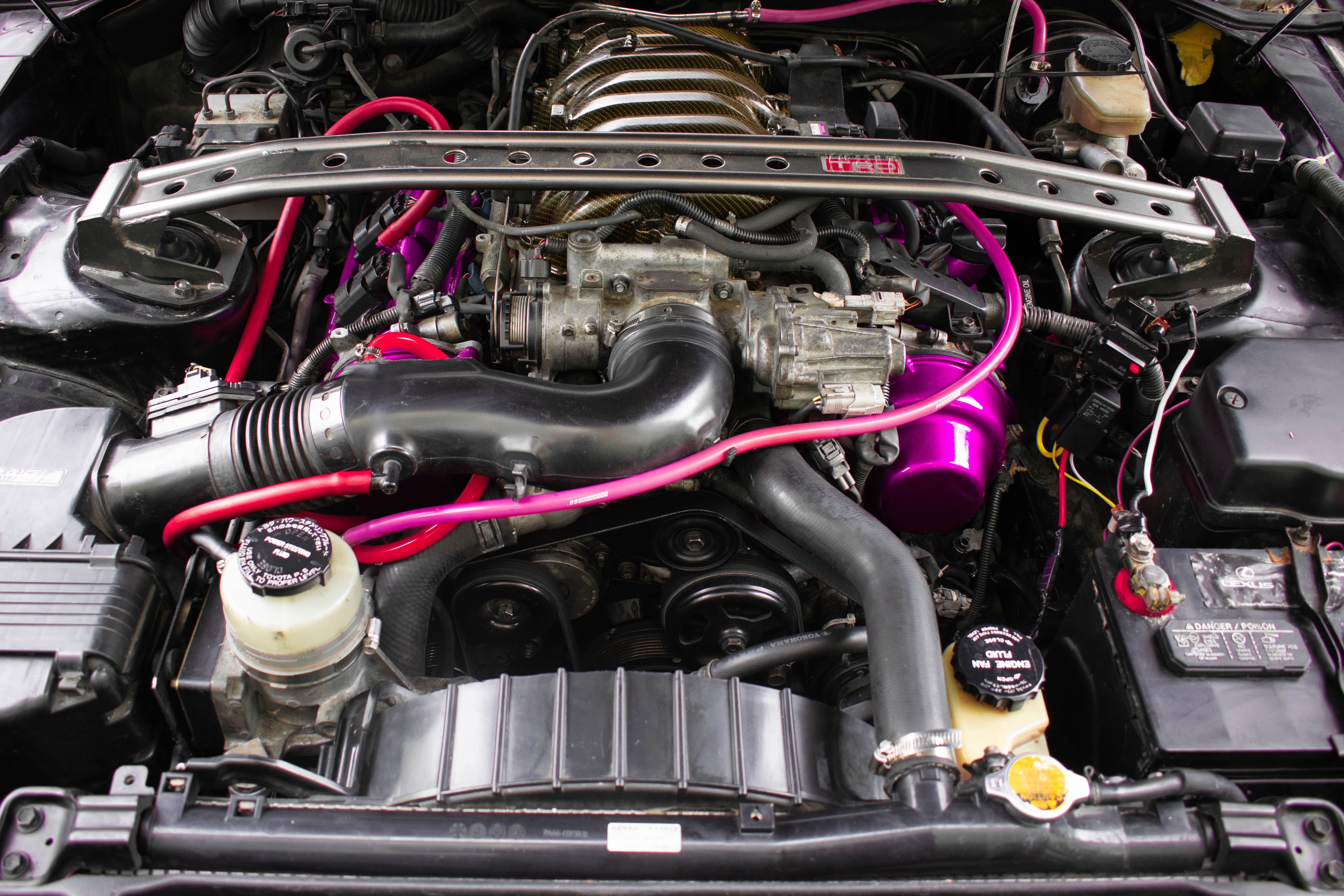
If you've ever chased an electrical gremlin through a 30-year-old OEM wiring harness, you know the pain. It starts with a misfire at high boost. You chase it for three weeks, replacing sensors and swapping injectors, before you find the real culprit: a splice from a previous owner's alarm install, buried under three layers of electrical tape, intermittently grounding out against the firewall. Hours lost. Money spent. Build stalled.
This is the reality of building performance cars on modified factory wiring. OEM harnesses were designed for a specific engine, a specific ECU, and a specific set of factory sensors — all in a configuration that's increasingly far removed from what modified cars actually run. The moment you bolt on a standalone ECU, run an engine swap, or start deleting OEM systems, the factory harness becomes a liability.
The Problem With Modified OEM Harnesses
A factory wiring harness from a 1990s performance car was engineered to exact specifications — but for factory use. The wire gauge, insulation rating, and connector quality were all chosen for a defined operating environment with a defined set of components. The moment you start cutting, splicing, and extending that harness, you introduce variables that weren't in the original design.
Over time, the problems compound. Insulation cracks and becomes brittle from years of heat cycling. Pins corrode inside connectors, creating resistance where there should be none. Splices — especially the dreaded twist-and-tape variety — work loose from vibration. PVC wire, used in most OEM harnesses from the 1980s and 90s, degrades significantly faster than modern cross-linked polyethylene wire when exposed to underhood temperatures.
Add a standalone ECU and the situation gets worse. Now you have a harness designed for a factory ECU with factory inputs being adapted to a standalone unit with different pinouts, different sensor calibrations, and different control strategies. The adapters and splices required to make this work are, at best, a compromise. At worst, they're a fire hazard.
What a Standalone Harness Actually Is
A standalone wiring harness is built from scratch — new wire, new connectors, new terminals — designed around your specific engine, your specific ECU, and your specific chassis integration requirements. There are no holdovers from the factory harness, no recycled wiring, no mystery circuits left in from deleted systems.
Every wire in the harness has a purpose. Every connector was chosen for the specific circuit it serves. The gauge of each wire was calculated for the actual current load it carries. The routing was planned for the specific engine bay it lives in. The result is a wiring system that is clean, documented, and reliable in a way that a modified OEM harness simply cannot match.
At SVK Works, we build every harness using TXL cross-linked polyethylene wire rated to 125°C continuous — not the PVC wire found in most OEM applications. Near heat sources like headers and turbos, we use Raychem Spec 44, the same wire specification used in aerospace and Formula 1 applications. Every connector is either genuine OEM-quality (for chassis integration points) or Deutsch DT/DTM series sealed mil-spec connectors for ECU and junction connections.
The Real Cost of Running Modified OEM Wiring
People often look at the cost of a standalone harness and compare it to the cost of doing nothing — keeping the factory harness and making it work. That comparison ignores what "making it work" actually costs over time.
Consider the hours spent chasing electrical faults. Each diagnostic session — testing sensors, inspecting connectors, pulling wiring diagrams for a harness that's been modified in unknown ways — costs time that has real value. For a shop, that's billable hours. For a home builder, it's evenings and weekends that could be spent driving.
Consider the parts replaced unnecessarily. How many sensors, ECUs, and injectors have been replaced by builders convinced they had a component failure, when the actual problem was a bad connection in the harness? A standalone harness with a documented wiring diagram makes fault isolation fast and accurate.
Consider the resale value. A car with a professionally built, documented standalone harness is a significantly more attractive purchase than one with a "custom" wiring solution of unknown provenance. The harness tells the story of the build — and a good harness tells a good story.
Plug and Play — What That Actually Means
When we say our harnesses are plug and play, we mean it in the specific sense that matters. The MK4 Supra harness uses the factory chassis connectors for every point where it interfaces with the car's existing wiring — the gauge cluster connector, the AC connector, the body harness connectors. You unplug the factory engine harness, plug in the SVK harness, connect to your ECU, and you're ready to tune.
For the MK3 Supra with a 2JZ swap, "plug and play" means we've handled the translation between what the A70 chassis expects and what the 2JZ delivers — gauge signals, AC integration, power steering — all resolved cleanly in the harness itself, not through a rat's nest of adapters in the engine bay.
The SC300 and SC400 harnesses take this further, handling the specific challenges of a Z30 chassis running a 2JZ, 1JZ, or 1UZ in standalone configuration, with full gauge cluster and accessories integration that makes the car feel factory-finished even though nothing under the hood is stock.
What Goes Into Building One
Building a standalone harness properly is not a weekend project. It starts with understanding the target platform at a deep level — what the chassis expects at every connector, what the ECU needs at every pin, and how the two get integrated cleanly. Then comes the wire selection, the schematic, the physical build, and the documentation.
At SVK Works, every harness starts with a wiring diagram specific to your build. Wire gauge is calculated per circuit, not estimated. Every wire is cut to length, labeled at both ends, and routed through the loom in a logical, serviceable layout. Every connector is installed with the correct terminal and verified for continuity and correct pin assignment. The finished harness ships with your build-specific wiring diagram so whoever works on the car next — you, your shop, or a future owner — knows exactly what they're looking at.
Who Needs a Standalone Harness?
If any of the following apply to your build, a standalone harness is the right answer:
- You're running a standalone ECU. Haltech, Link, AEM, MaxxECU, EMU Black — any of these ECUs benefit enormously from a harness built specifically for them.
- You've done an engine swap. The factory harness for your donor engine was not designed for your chassis. A purpose-built harness solves this cleanly.
- You've been chasing electrical faults. If you've spent more time debugging wiring than tuning the car, a standalone harness will fix the root cause rather than the symptoms.
- You're building a serious track or race car. Electrical reliability on a race car is not optional. Mil-spec wire, sealed connectors, and a documented harness are the baseline.
- You want a clean, professional build. The wiring is the part of the build most people see last and value most when it's done right.
The Bottom Line
A standalone wiring harness is not a luxury for serious builds — it's the foundation that everything else depends on. An engine that starts reliably, runs consistently, and is easy to diagnose starts with wiring that was designed correctly from the beginning.
The cost of a properly built harness is a one-time investment. The cost of chasing electrical gremlins through modified factory wiring is ongoing, unpredictable, and never truly resolved — because the root cause is still there, buried in degraded insulation and unreliable splices, waiting to cause the next problem at the worst possible moment.
Browse our full harness catalog or contact us to discuss your specific build requirements.